The green streaks down your north wall and the grey film on your siding are not dirt — they are living growth. Washing them off correctly makes a house look years newer in an afternoon.
House washing is the cleaning of a home's exterior walls, trim and eaves to lift off the algae, mildew and grime that discolor them, without harming the surface underneath. At Standard Power Washing every house gets a soft wash, with the mix and the rinse pressure matched to what the walls are made of.
Most of what discolors a house is biological: algae, mildew, and mold feeding on moisture held against the surface. Because the growth is rooted in the material rather than sitting on top of it, blasting at high pressure is both ineffective and risky — it drives water behind lap siding, works under trim and window seals, etches stucco and soft wood, and can lift paint.
A soft wash solves the actual problem. Low pressure carries a cleaning solution onto the surface, that solution kills the growth at the root, and the wall is rinsed clean. The result lasts considerably longer than a pressure rinse, because what caused the staining is dead rather than merely knocked loose.
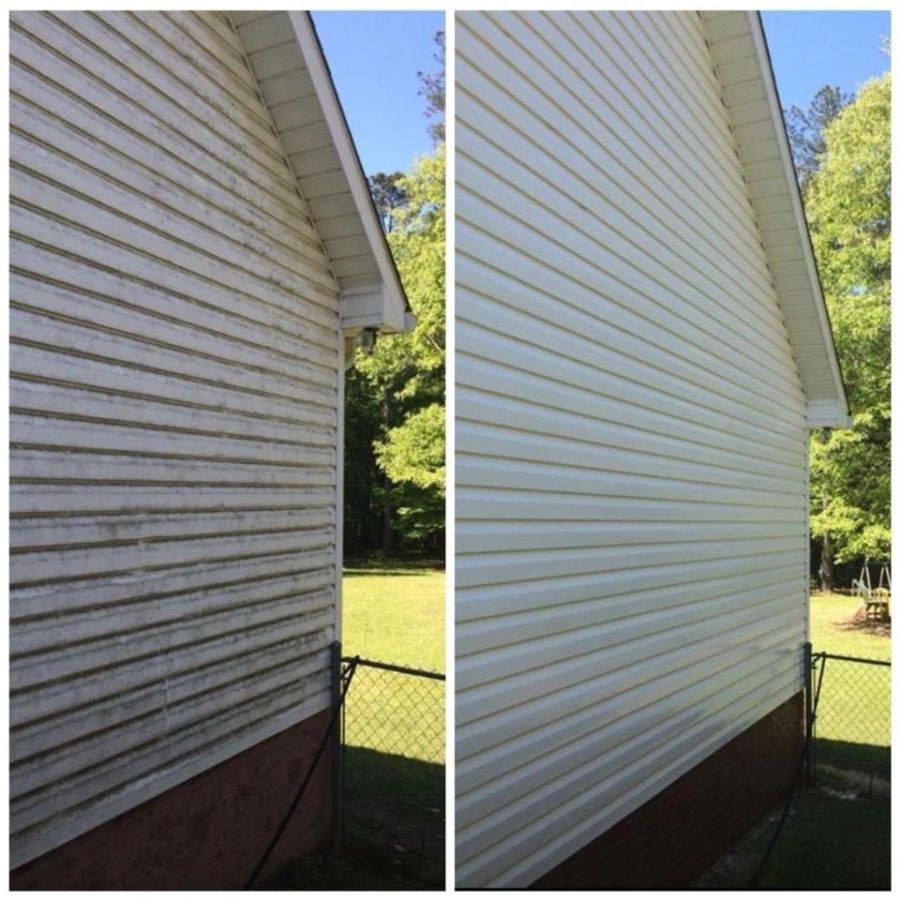
Lap siding, before and after.
Our process
Walk the house: we note the surfaces in play — vinyl, Hardie, brick, stucco, painted wood — along with any damaged trim, open weep holes, or failing caulk that needs avoiding.
Protect the landscaping: beds and sensitive plantings are pre-wet before anything is applied, then rinsed again afterward.
Apply and dwell: the solution goes on at low pressure and is given time to work. This is the step that actually removes the staining.
Rinse: top down, at a pressure appropriate to the surface, including the areas where runoff collects.
Check the details: eaves, soffits, shutters, and the shaded elevations that hold the worst growth.
What gets washed
Siding, brick, stucco, soffits and eaves, shutters, gutter exteriors, porches, and columns. Windows are rinsed as part of the wash, though that is not the same as a dedicated window cleaning. If your driveway, walkways, or patio need attention at the same time, those are a separate surface with a different method — concrete takes pressure and heat that siding never should.
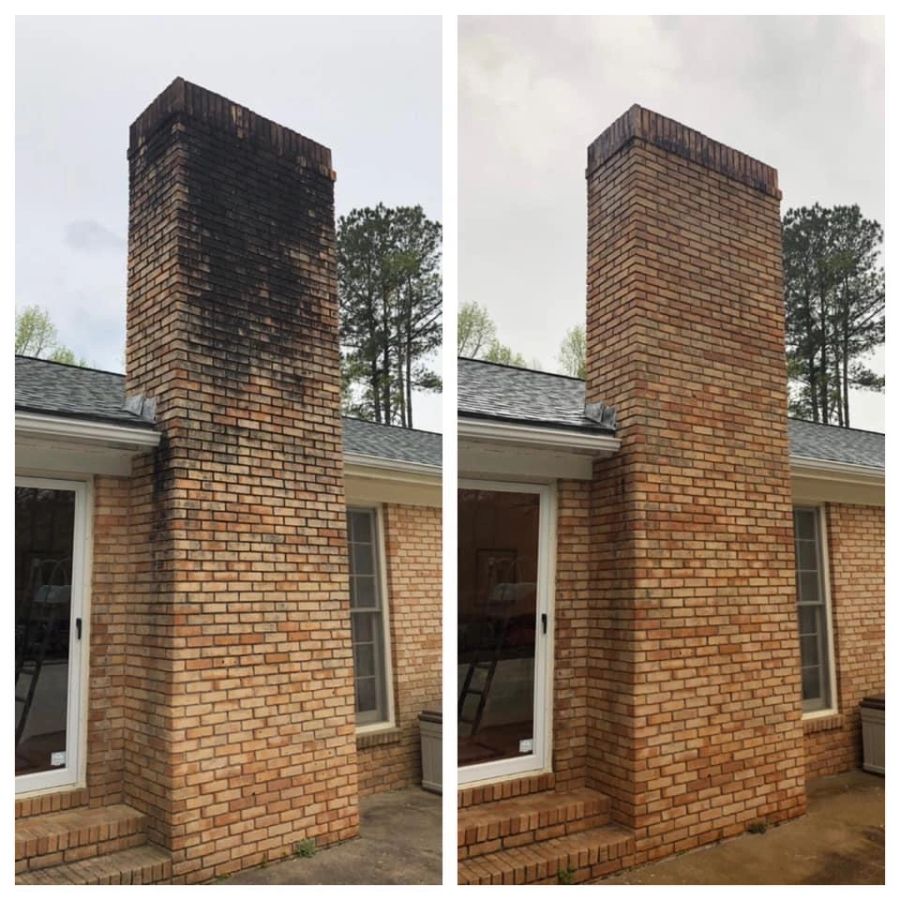
A brick chimney, before and after.
North Texas is hard on exteriors
Humidity, sudden storms, and long stretches of heat give algae and mildew an ideal cycle here. North-facing walls and anything shaded by mature trees stay damp the longest and are almost always the first to show growth. Most homes in Fort Worth and the surrounding suburbs are due every 12 to 24 months, with the shaded elevations setting the schedule.
Typical intervals, surface by surface:
How often each surface of a house needs washing
Surface
Typical interval
What sets the schedule
Siding, brick and stucco
Every 12 to 24 months
How long the walls stay damp
North-facing and tree-shaded walls
At the short end of that range
They stay wet longest and show growth first
Driveway and flat concrete
About once a year
Shade and moisture under trees bring it forward
Where we work
We wash houses in Fort Worth, Benbrook, Aledo, Weatherford, Burleson, Crowley, Mansfield, Keller, Saginaw and Haslet. The business is owner-operated and fully insured, and it has completed more than 500 jobs since 2022.
Each town above has its own page, and the full list is on service areas.
House washing FAQs
What is soft washing, and how is it different from pressure washing?
Soft washing uses low pressure and a cleaning solution that kills algae, mildew and mold at the root, and the wall is rinsed clean. Pressure washing relies on force, which suits hard concrete but drives water behind siding and etches soft surfaces. Siding, brick and stucco get a soft wash; driveways get pressure and heat.
Is pressure washing safe for house siding?
High pressure is not safe for most siding. It drives water behind lap siding and under trim, etches soft surfaces, and can strip paint. House washing should be done as a soft wash: low pressure plus a cleaning solution that kills the mildew and algae causing the discoloration.
What causes the green and black streaks on my house?
Those are living organisms, not dirt. Green is usually algae, black streaking is typically mildew or mold, and the chalky film on older siding is oxidation. Rinsing with water alone does not remove them because the growth is rooted in the surface, which is why it returns within weeks.
How often should a house be washed in North Texas?
Every 12 to 24 months for most homes. North-facing walls and anything shaded by trees hold moisture longer and grow back faster, so those elevations often set the schedule for the whole house.
Will house washing harm my landscaping?
Not when the work is done properly. Beds and sensitive plantings are pre-wet before the solution goes on and rinsed again afterward, which dilutes anything that reaches them. Tell us about anything fragile or newly planted before we start.
Do you wash brick and stucco as well as siding?
Yes. Brick, stucco, Hardie board, vinyl, and painted wood all get washed, but not identically. Stucco and older mortar need lower pressure and a gentler mix than vinyl does. The method is matched to the surface.
What drives the price of house washing?
The size of the house, the surfaces involved, how much growth is on them, and how easy the walls are to reach. Adding the driveway or roof to the same visit costs less than booking each separately. Estimates are free and most are sent the same day from an address and a couple of photos.
Free estimates
Find out what your house should look like
Call or email with your address and we will get you a quote — most go out the same day, and standard homes do not need a site visit first.